The emotional intelligence that is truly and readily accessible in our most intense moments of pressure. Designed by Gareth Chick over a forty-year corporate career, CEQ is the method behind every programme, workshop and coaching engagement we deliver.

“Both EQ and CEQ are fundamentally about self-awareness, since without it no change is possible. But corporatism is such a powerful contaminator that our self-awareness cannot merely be intellectual. With CEQ our self-awareness has to be felt physically, or else our powerful intellect will seduce us into denial.”
Gareth Chick · Corporate Emotional Intelligence: Being Human in a Corporate WorldHuman behaviour is peculiarly conditioned by working in a corporate environment, with well-meaning people behaving in unnatural ways, driven by fear. The four pillars are the practical response: the things we have to become aware of, and then practise, to lead well under pressure.
The crucial physiological confrontation of how we are actually behaving when under pressure: the habits that have been developed through constant conditioning, and that have become unconscious and automatic. They only ‘work’, seemingly in the moment, because everyone around us is trapped in the same insanity. We have to break these habits, and that only comes about by practising new ones until they are in our muscle memory.
The habits →We are either learning ‘negatively’ through our increasingly conditioned responses to threat, or ‘positively’ through conscious consideration, deliberate action and immediate feedback. Our brains are five times more sensitive to negative feedback than positive, so we have to work five times harder on nurturing the positive learning. Positive learning is not a ‘nice to have’; it is a complete essential.
Read more →Not a manufactured vulnerability as part of a strategy to appear more human, but the true human vulnerabilities of flaws, mistakes, uncertainty, tiredness, of struggle. We have to stop punishing people for struggling. And the greatest way of forcing vulnerability into the open is to make everything possible transparent, because it is the community as a whole that can best solve the problems at hand.
Read more →We treat the org chart as if it were a solid physical structure, targets as immutable states of being, KPIs as objects in their own right rather than indicators there to guide us. In all of this we lose our grip on what is truly real: the people we have relationships with who are affected by our actions. Without a strong touchstone to reality we simply won’t have the humility we need to be trusted and to lead with real authenticity, and therein lies the road to hubris.
Read more →The biggest single obstacle to changing anything about how we behave at work is our complete lack of awareness of our controlling habits. Why would we change if we are unaware of how we are really behaving, particularly if we already think we’re doing the right things?
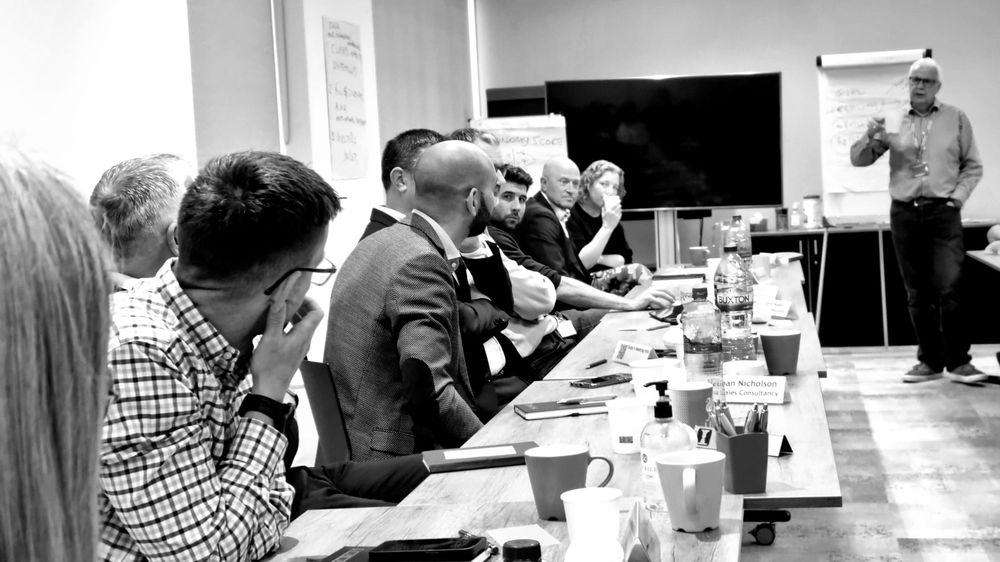
Simplified down, the three main habits are closed questions, filling silences and giving multiple inputs. We become aware, and with awareness comes true choice. Now we can put new habits in their place: asking open questions one at a time, allowing people a few seconds to think, and not accepting that they ‘don’t know’ the answer.
Coaching is not a formal session in a diary. It is the way we are with people, and these are the seven prompts that turn a management habit into a coaching one. Each is taught and practised in our workshops and programmes.
Self-regulation. Under pressure the amygdala takes over and our habits come out to play, so the first trigger is to notice the surge and settle ourselves before we open our mouths. Being ‘in the moment’ with people requires constant self-regulation.
Read the post →People know when they are being judged, and they defend themselves. Ask someone a question that comes from judgement and you will get a defensive or evasive response. Ask from a place of genuine curiosity and you will get both a truthful and a revealing answer.
Read the post →A coach takes a person outside their comfort zone, and holds them there while they learn and grow. They have tried the obvious. Whatever they do next will involve stepping outside it, and ‘let me tell you what you need to do’ is not what they need.
Read the post →We don’t need to understand the other person’s problem; we need to understand them. Coaching is just the way we are with people, so the opportunity is to use the moments when we are in greatest rapport with them.
Read the post →The biggest problem we have with feedback is that we believe it involves passing judgement. Feedback is information: factual and evidence-based, like the video replay an athlete watches with their coach. When it’s given well, it’s often all we need.
Read the post →Questions that access the right brain contain the energy of hope, possibility and, most importantly, human connection. ‘What ideas are you playing with at the moment?’ deliberately uses the word ‘play’.
Read the post →However much of our potential we are delivering, there is more to come, and we don’t need to tap into much more to produce a step change. The coach’s job is to get the other person’s best version into the room.
Read the post →The biggest problem any of us have in achieving excellence in coaching is that we tend to believe the myths that surround the term itself. The purpose of coaching is to realise people’s full potential whilst holding them accountable for results.
That it is not being tough on people or driving better performance, but being more gentle and understanding, needing an immense amount of patience.
The belief that stops us investing in the skill. The same barrier that stops us delegating, since it is often quicker to do it ourselves.
Explaining a process, a guideline or a company rule, and telling ourselves that we are coaching.
We genuinely tell ourselves that we do.
Coaching is not a normal, everyday, superficial, ‘matey’ conversation. It is a structured dialogue, controlled by the coach, with a direction and an intent.
Open questions are powerful because they do two jobs at once. They make the other person think, and start the process of them accepting responsibility; and they communicate the position we are taking as the coach: acceptance, confidence, belief, the fact that there is a solution. If asking open questions is so fundamental, we had better get good at them. Question crafting is one of our core processes.
Goal, Reality, Options, Will: the structure for a coaching conversation with a direction and an intent, extended with the CEQ triggers so it works under pressure, not just in a quiet room.
Question crafting →“A problem cannot be solved at the level at which it presents itself.” Listen hard, work out which level someone is on, and ask a question they have to answer at a different level.
Logical Levels →Listening intently to the words, phrases, metaphors and poetry of what someone is saying, so that we are drawn into their narrative and the open questions come naturally.
SuperListening →OUCH!, powerful questions, GROW+ and feedback in a single CPD-accredited day.
From £295 per seat →All seven triggers over three live modules and two 1:1 coaching sessions.
£895 →The four pillars, coaching, authentic leadership, change and strategy for senior leaders.
£5,945 →The complete method online, with ARIA alongside you and a CPD certificate on completion.
From £195 →Our in-house experience as senior operational executives, combined with our methodologies in Coaching, Leadership and Change, means we are uniquely equipped to engage with you at the earliest stage of your thinking, whether you are planning an organisation-wide transformation or a relatively straightforward L&D curriculum. Our role is to add value, not simply to sell you programmes, and certainly not to build dependency upon us.